- English
- Español
- Português
- русский
- Français
- 日本語
- Deutsch
- tiếng Việt
- Italiano
- Nederlands
- ภาษาไทย
- Polski
- 한국어
- Svenska
- magyar
- Malay
- বাংলা ভাষার
- Dansk
- Suomi
- हिन्दी
- Pilipino
- Türkçe
- Gaeilge
- العربية
- Indonesia
- Norsk
- تمل
- český
- ελληνικά
- український
- Javanese
- فارسی
- தமிழ்
- తెలుగు
- नेपाली
- Burmese
- български
- ລາວ
- Latine
- Қазақша
- Euskal
- Azərbaycan
- Slovenský jazyk
- Македонски
- Lietuvos
- Eesti Keel
- Română
- Slovenski
- मराठी
- Srpski језик

Things to consider when choosing agricultural nets
Choosing the Right Agricultural Nets: A Complete Guide
Selecting the right agricultural protective nets is crucial for helping farmers safeguard crops and boost yields. Each crop faces unique challenges from pests, birds, or harsh weather conditions.
By matching shading rate, mesh size, and material to the crop's specific needs, growers can create optimal growing conditions.
Identify Your Crop Protection Needs
Crop-Specific Requirements
Every crop has distinct growing needs. Some require more direct sunlight, while others need protection from intense sun exposure. For example, leafy greens thrive in partial shade, but fruiting plants like tomatoes may need more direct sunlight.
Farmers should first determine their crop's specific requirements before choosing insect netting.
Common Threats: Pests, Birds, Weather
Crops face numerous threats in the field. Insects damage leaves and fruits. Birds may peck at seeds or ripe produce. Extreme weather events such as hailstorms, strong winds, or heavy rain can destroy crops within minutes. Farmers must identify the primary threats their crops face.
This step helps them select the appropriate agricultural protective nets.
Pests: Insects like aphids, whiteflies, and beetles reduce yield and quality.
Birds: Birds frequently feed on seeds, berries, and seedlings.
Weather: Hail, strong winds, and excessive sunlight cause physical damage or stress to crops.
Climate and Environmental Factors
Local climate plays a vital role in net selection. Regions with intense sunlight may require nets with higher shading percentages.
Areas regularly hit by storms or strong winds need stronger, more durable protective nets. Farmers should also consider humidity and temperature factors.
Select Agricultural Net Types Based on Your Needs
Types of Agricultural Nets
Choosing the right net type helps farmers protect crops and improve yields. Each net serves unique purposes for different applications. Understanding these options allows growers to select the best agricultural nets for their needs.
Shade Nets
Shade nets and cloth effectively block intense sunlight. Farmers use shade cloth to control the amount of shade crops receive.
Shade cloth comes in various densities, providing different shading levels. Some crops need 30% shade, while others grow well under 50% or even 75% shade.
Shade cloth helps prevent sunscald and reduces heat stress. It also minimizes water evaporation, thus preserving soil moisture. Many growers use shade cloth in greenhouses, nurseries, and open fields. Shade cloth can also protect seedlings from wind and drizzle.
Anti-Bird Nets
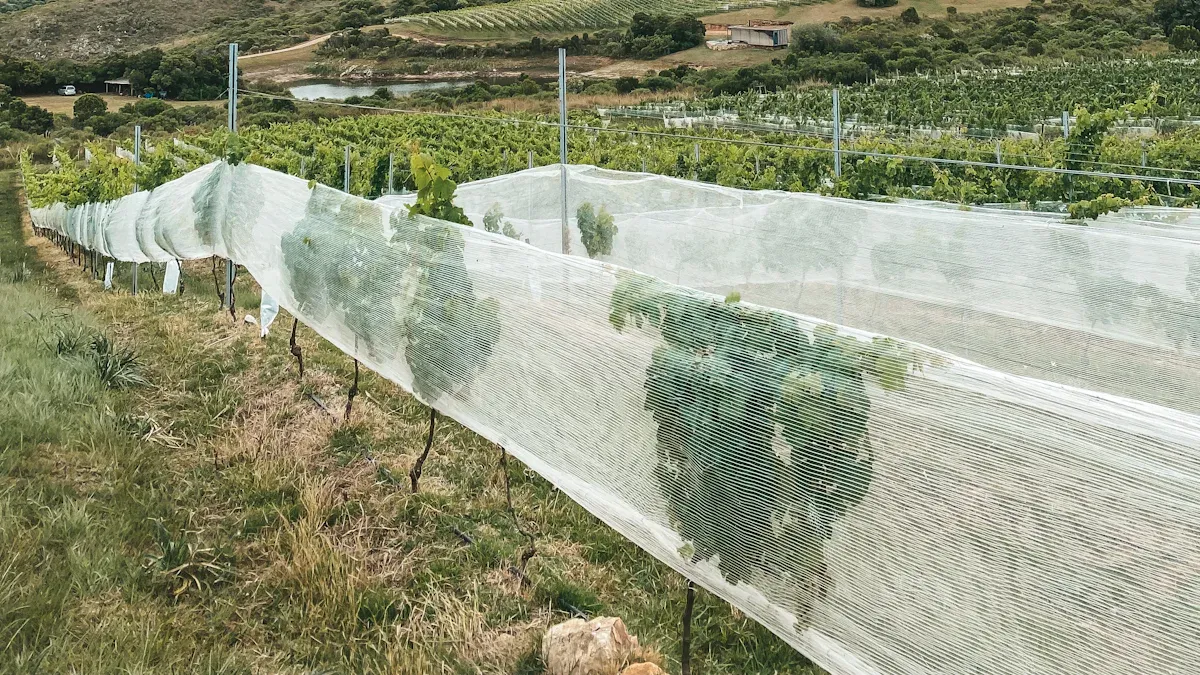
Anti-bird nets safeguard valuable crops from bird damage. These nets are made of strong, lightweight materials with small mesh sizes. They're ideal for fruit trees, vineyards, and berry bushes.
Farmers install anti-bird nets over crops or use support structures. The nets prevent birds from pecking at seeds, fruits, and seedlings, helping reduce crop losses and improve harvest quality.
Insect-Proof Nets
Insect-proof nets protect crops from harmful insects. These nets feature fine mesh that blocks pests like aphids, whiteflies, and beetles. They allow air and light to pass through while effectively keeping insects out. Farmers use insect-proof nets in greenhouses, tunnels, and open fields. These nets help reduce chemical pesticide usage.
Anti-Hail Nets
Anti-hail nets protect crops from hail damage. These protective nets use tough, flexible materials that absorb hail impact. They can cover orchards, vineyards, and vegetable fields.
They help prevent bruising and breakage, shielding crops from severe weather conditions.
Key Features of Agricultural Protective Nets
Material Quality (High-Density Polyethylene)
Material quality forms the foundation of effective agricultural protective nets. Most high-quality nets use High-Density Polyethylene (HDPE) because this material resists stretching, tearing, and chemical corrosion. HDPE also offers good flexibility, making installation and removal easier.
Farmers trust HDPE for its lightweight properties and ability to withstand repeated use in various environments. HDPE agricultural nets work versatilely, from greenhouses to open fields. HDPE doesn't absorb water, so it dries quickly after rain, helping prevent mold growth.
Farmers should always check the thickness and weaving of HDPE nets to ensure they meet specific needs. Sturdy HDPE nets last longer and provide better crop protection.
UV Resistance
Sunlight weakens many materials over time, but UV-stabilized agricultural nets withstand intense sun exposure. UV resistance ensures nets don't become brittle or fade after prolonged sun exposure.
This feature is especially important for shade nets, which typically cover crops for months. UV-stabilized shade nets maintain color and strength even in intensely sunny regions. Farmers using UV-stabilized agricultural nets can reduce replacements and lower maintenance costs.
UV resistance also helps nets retain shape and flexibility, crucial for repeated use. When choosing agricultural protective nets, always select products marked "UV-stabilized" or "UV-treated."
Mesh Size and Strength
Mesh size determines what can pass through agricultural nets. Fine mesh blocks small insects, while larger mesh stops birds or hail. The appropriate mesh size depends on crop type and regional primary threats.
For example, insect-proof nets use very fine mesh to block aphids and whiteflies, while anti-bird nets use larger mesh. Mesh strength also matters. Strong mesh resists tearing from wind, animals, or falling branches. Shade cloth with reinforced edges and sturdy mesh withstands harsh conditions. Farmers should select appropriate mesh size and strength based on crop needs and local environment.
Color and Shading Percentage
Color and shading rate play critical roles in agricultural nets' crop protection effectiveness. Shade cloth comes in various colors, including green, black, white, and sometimes blue.
Each color alters the quantity and quality of light reaching plants. For instance, black shade cloth absorbs more heat, while white shade cloth reflects sunlight, keeping crops cooler. Green shade cloth balances light absorption and reflection.
Shading rate indicates how much sunlight shade nets block. Farmers can choose shade nets with 30%, 50%, 70%, or even 90% shading rates based on crop needs. High shading rates protect delicate plants from sunburn, while lower rates suit sun-loving crops. Selecting agricultural protective nets with appropriate color and shading rates helps crops grow healthily and increase yields.
Conclusion
When choosing agricultural shading nets, it is necessary to carefully consider the crop requirements, material, shading effect and mesh size. Shading nets offer a variety of shading and protection options. Farmers should compare different types, shading rates and colors of shading nets.
The shading cloth needs to have an appropriate shading rate to meet the needs of various crops. Well-maintained shading cloth can protect each harvest. Only a shading cloth with the appropriate functions can achieve the best results.