- English
- Español
- Português
- русский
- Français
- 日本語
- Deutsch
- tiếng Việt
- Italiano
- Nederlands
- ภาษาไทย
- Polski
- 한국어
- Svenska
- magyar
- Malay
- বাংলা ভাষার
- Dansk
- Suomi
- हिन्दी
- Pilipino
- Türkçe
- Gaeilge
- العربية
- Indonesia
- Norsk
- تمل
- český
- ελληνικά
- український
- Javanese
- فارسی
- தமிழ்
- తెలుగు
- नेपाली
- Burmese
- български
- ລາວ
- Latine
- Қазақша
- Euskal
- Azərbaycan
- Slovenský jazyk
- Македонски
- Lietuvos
- Eesti Keel
- Română
- Slovenski
- मराठी
- Srpski језик

How to Choose Between PVC and PE Tarpaulins Based on Usage
How to Choose Between PVC and PE Tarpaulins Based on Usage
Tarpaulins are essential tools for protection in daily life, agriculture, industry, and outdoor activities, but choosing the right material—PVC or PE—can make a big difference in performance and durability. Both materials have unique advantages, and the key to a wise choice lies in matching their characteristics with your specific usage needs. This guide will help you distinguish between PVC and PE tarpaulins and select the most suitable one for your scenario.
First, let’s understand the basic properties of each material. PE (Polyethylene) tarpaulin is made from lightweight, flexible polyethylene resin. It is cost-effective, easy to carry, and has good waterproof and dustproof performance. However, it is less resistant to high temperatures, UV rays, and tearing compared to PVC. On the other hand, PVC (Polyvinyl Chloride) tarpaulin is reinforced with a polyester base cloth coated with PVC, making it heavier, thicker, and more durable. It boasts excellent waterproof, UV-resistant, tear-resistant, and weather-resistant properties, suitable for long-term outdoor use.
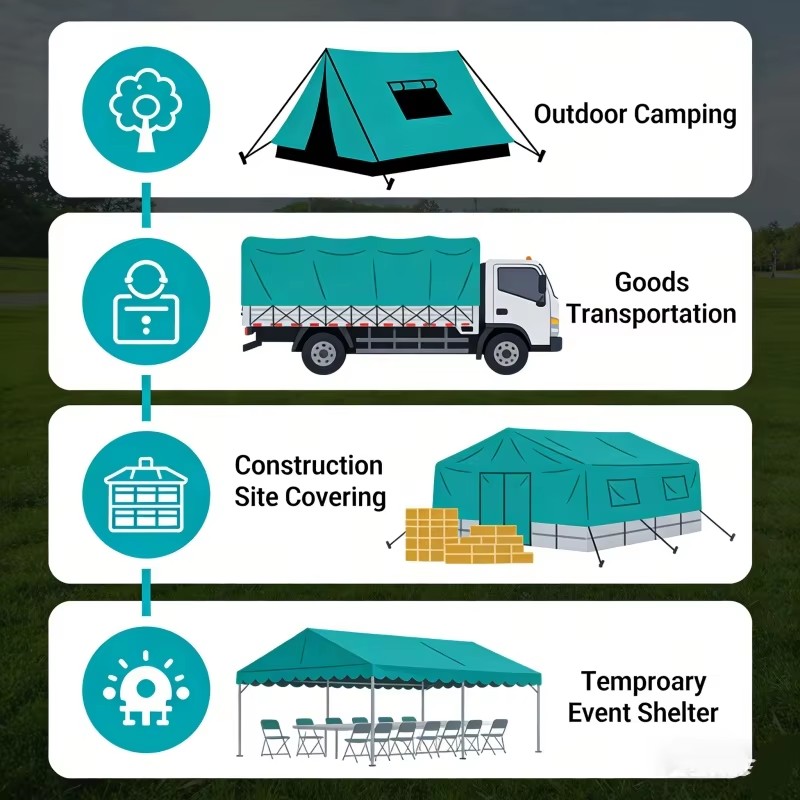
For outdoor leisure and temporary protection, PE tarpaulin is the ideal choice. If you need a tarpaulin for camping, picnics, or temporary coverage of small items (such as garden furniture, bicycles, or outdoor storage boxes), PE’s lightweight and foldable features make it easy to carry and store. It is also affordable, making it a cost-effective option for short-term use. Additionally, PE tarpaulin is non-toxic and environmentally friendly, suitable for covering food, vegetables, or other items that require non-polluting protection.
When it comes to long-term outdoor use, industrial applications, or harsh environments, PVC tarpaulin is far more reliable. For example, in agriculture, PVC tarpaulins are perfect for covering greenhouses, grain, and agricultural machinery, as they can withstand wind, rain, snow, and strong UV radiation without aging or tearing. In logistics and transportation, PVC tarpaulins are widely used to cover truck cargo, trailers, and ships, thanks to their high strength and wear resistance. They also perform well in construction sites, where they can cover building materials and debris for a long time, protecting them from the elements.
Another factor to consider is maintenance and service life. PE tarpaulins have a shorter service life (usually 1-3 years) and are prone to cracking or breaking if exposed to direct sunlight for a long time. They are also not suitable for high-temperature environments. PVC tarpaulins, however, can last 5-10 years with proper maintenance, as they are resistant to UV, high and low temperatures, and chemical corrosion. They are also easy to clean—just wipe with water and a cloth to remove dirt.
In summary, PE tarpaulins are best for temporary, lightweight, and cost-sensitive scenarios, while PVC tarpaulins excel in long-term, heavy-duty, and harsh environment applications. By clarifying your usage purpose (temporary or long-term, indoor or outdoor), budget, and performance requirements, you can easily choose between PVC and PE tarpaulins and get the most value from your purchase.